Posts

Showing posts from 2025

Black Session IPA

Image
    I've tasted a few black IPA's over the years and the ones I've liked the best are those that have absolutely no roasted barley flavor. These are rare, expecially here in Mexico. With a black IPA I want to close my eyes and taste a West coast style IPA with a boat load of hop flavor and aroma, subtle caramel and bread sweetness with a substantial bitter backbone.

Duvel Clone or Belgian Golden Strong

Image
 O ne of my favorite styles of beer is the Belgian Golden Strong, and the classic commercial example is Duvel . 

Bottle In A Bag

Image
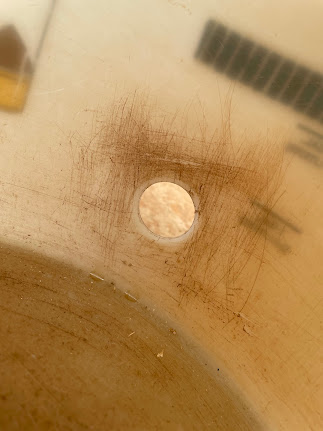
Improvising with Style: A Homebrew Hack Worth Keeping  I ran into a bit of a special needs situation last week, and figured it was worth sharing—not for sympathy, but because this is what I love about homebrewing. No matter how many batches you’ve clocked, something will always go sideways. A missing part, a busted seal, or in this case a completely disgusting bottling bucket. The unexpected shows up, uninvited, and dares you to stay creative. So here's the scene, I'm in my element puttering around the brew cave and I'm needing to bottle a batch of porter. Easy enough—except the only bottling buckets I had looked like they’d been dragged through a gravel lot and left to soak in dirty dishwater for a few years. Discolored, scratched to hell, and definitely not the sterile environment you’d want for your pristine, freshly fermented beer. Unless, of course, you're into doctoring your brew with unknown bacteria strains and suggesting that it's a Belgian such or such....

Kirkland Helles lager

Image
Best beer value  K irkland Signature — a name that conjures bulk toilet paper and thirty-pound bags of trail mix — also makes beer. Or rather, they commission beer. And not just any beer. These cans of budgeted bliss are contract brewed by Deschutes Brewery, which, as far as breweries go, is like finding out the gas station hot dog you just ate was actually made by Thomas Keller. Their Helles — that’s “light” in German, though in beer it just means “not IPA” — is clear, golden, and practically screams, “Drink me while wearing cargo shorts.” At 4.5% ABV, it’s light enough to keep you from falling face-first into your lawn after three, yet satisfying enough to make you think, “Huh. Maybe Costco does know what they’re doing.” It’s crisp, bready, ever-so-slightly bitter, and—perhaps most importantly—cheap. $14.60 for a twelve-pack (that’s 276 pesos if you’re playing the home game in Mexico). It even won a gold medal at the 2023 GABF, which makes it, technically, an award-winning b...

Brewing an IPL

Image
  I ndia Pale Lager (also called a Cold IPA in some corners of the beer world) is, at its core, an IPA fermented with lager yeast at cooler, lager-friendly temperatures. It’s not rocket science—just a way to get all the bold, hoppy character of an IPA with the clean, crisp edge that comes from cold fermentation. I like them because they are the complete opposite of the beers I truly abhor: those murky, overly fruity New England IPAs. India Pale Lagers are a West Coast style, which naturally means they’re superior to anything being brewed in the Midwest or East Coast. (Sorry, but it had to be said.) And let me just say—it’s been refreshing to see the haze finally clearing from tap lists. If I'm lucky, the hazy craze is on its way out, and clear beers are reclaiming their rightful place in the lineup at my favorite breweries. If I'm really lucky, those “hazies” will occupy a single tap which I believe is a fair share of the taproom landscape. It’s been a long, sticky run for...

Where's the head?

Image
  Why IPA Foam Ain’t What It Used to Be After spending two years nestled in the warm tortilla-fold of Michoacan, Mexico, I returned to California expecting certain things: traffic, overpriced avocados, and IPAs with foam — you know, the normal stuff. But no. The craft beer I once knew had changed — like an old friend who used to be the life of the party but now sighs a lot and wears Hokas. What struck me most — and yes, it felt personal — was the absence of head. Not mine, though arguably that’s long gone, but the kind that used to crown a pint glass with snowy, cloud-like dignity. These days, every IPA I’m handed at the bar or I pour from a can has the low carbonation of a forgotten bottle of sparkling water that’s been sitting in the back of the fridge since last Christmas, and the lack of foam that makes me question everything I thought I knew about what a good IPA should be. There it sits in front of me, hoppy as hell, yes — but also just liquid disappointment and th...

Josephsbrau Hefeweizen Review

Image
 T he beer was called Josephsbrau. It sat on the shelf at Trader Joe’s with a label faded and forgettable, a name like a whisper in a language I used to know. There were no Boatswain lagers that day. No proof for the theory I’d come to test. Only this wheat beer. Amber and solemn. A thing waiting to be chosen. I took it home. It poured the color of dusted brass. Too dark, maybe. Heavy in the glass. The smell rose up like something old and honest—clove and banana and grain. A wheat beer from the old world. Or the ghost of one. I drank it and it was good. Not perfect. But good in the way something can be when it surprises you and asks nothing more than that you notice. I believed it was brewed by Gordon Biersch, down in San Jose. And the name brought something back. A restaurant in Aptos the Brittania Arms, years ago. A man behind a bar. Dan Gordon. There was a promotion, some cheap celebration. Buy a pint and get a mug. A man like me doesn’t turn down a mug. So I did. And the b...

Boatswain IPA Review

Image
  D o you remember that old Smucker’s jam commercial? “With a name like Smucker’s, it has to be good.” I suppose the idea was that no one would dare saddle a product with such an unfortunate name unless it had something redeeming inside the jar. I thought about that as I stared down a six-pack of Boatswain IPA at Trader Joe’s—the beer equivalent of an off-brand cereal trying its best to look earnest. At $5.99, it practically leapt into my cart, whispering, “I won’t hurt you... much.” I wanted it to be good. Not out of optimism, exactly, but out of necessity. A beer that cheap has to be good, otherwise what’s the point of capitalism? But the name— Twin Screw Steamer —sounded less like an India Pale Ale and more like a nautical mishap. And sure enough, it drank like one. Imagine a rusty barge moored in a Wisconsin inlet, full of malt syrup, the scent of cardboard, and the gentle fizz of regret. From what I could gather in the 37 seconds I spent Googling it, Rhinelander Brewing Co.—n...

Glycol Chiller Part II

Image
open fermenter also know as a garbage can I n Part 1, we took a dive into how I engineered a DIY glycol chiller—a way to keep my fermenters cool without emptying my wallet. From repurposing an air conditioner to using a temperature controller and a humble light bulb to trick the system, the build is all about thinking outside the box and making sure my beer stays in that perfect fermentation temperature zone. But keeping the glycol chilled is only half the battle. Here in Part 2, let me show you how I circulate that cold glycol to maintain the ideal fermentation temperatures and make sure everything stays on track during the hot months. Let's get that cold fluid where it really counts. Now that we’ve got a reliable reservoir of sub-zero glycol humming along in our Igloo cooler, it’s time to move that cold power where it counts: the fermenters. At the center of this operation is what I like to call the  Command Module —a black utility box fitted with three ST-1000 temperature ...

DIY Glycol Chiller: Because it's fun

Image
W hen it comes to homebrewing on a budget, the name of the game is resourcefulness . We’re talking Goodwill ingenuity, garage-engineered brilliance, and yes—even cardboard boxes and plumbing scraps if the job calls for it. Because at the end of the day, if it works, it works. And if it works well ? Even better. Take, for instance, my homemade glycol chiller—a critical piece of equipment for keeping fermentations cool during the toasty months here in Michoacán. You could drop some serious cash on a commercial unit from a reputable supplier like MoreBeer! or Northern Brewer , and you’d be perfectly justified in doing so. But if you're like me—stretching every dollar like sourdough starter—you start looking at what's lying around and think, there's got to be a better way . Spoiler: there is. The Concept The goal is simple: maintain a reservoir of chilled glycol to circulate around fermentation vessels, keeping them at a consistent temperature even when ambient conditions say ...

Homebrew In Decline

Image
  When I started homebrewing in the late ’90s, it wasn’t because I wanted to ride some trendy wave—it was because I was broke and thirsty. Sierra Nevada Pale Ale was my holy grail, but back then, buying a six-pack felt like choosing between good beer and groceries. So I figured, hell, I’ll just make it myself. How hard could it be? Pretty damn hard, it turns out. I dove in headfirst, drunk on the belief that I could crack their code on my first or second try. Spoiler alert: I couldn’t. Batch after batch of well-intentioned swill taught me a humbling truth—good beer isn't easy. It takes patience. Precision. Pain. But through all the misfires and off flavors, I kept going. Somewhere along the way, I stopped chasing Sierra Nevada and started making something that was mine. It wasn’t their beer anymore. It was my beer. And it was good. Back then, homebrewing felt like a secret society—a ragtag crew of misfits and dreamers stirring kettles in garages, swapping yeast strains like old vin...

Time to brew some lagers

Image
With my homebrew glycol system now up and running (more on that soon), it felt like the perfect time to dive into the world of lagers. I tend to gravitate toward classic styles, so my latest brew is a nod to the standard American lager—clean, crisp, and easy-drinking. Below you'll find the recipe for what I'm calling Markweiser , a rice lager featuring 22% pre-cooked white rice in the grain bill. It’s light, refreshing, and made to be shared. Markweiser I brewed an 11 gal. post boil batch anticipating 2 full 5 gallon kegs after fermentation. I referenced Bru'n water yellow balanced profile and used 75% reverse osmosis water. Effeciency 92%, Attenuation 87%, ABV 5.5% (on the high side for style), SRM 3, IBU 17, O.G. 1.048, F.G. 1.006 14 lbs. Pilsner malt 8 ounces of dextrin malt 4 lbs. cooked rice Mashed in at 150f. for 90 minutes to fully convert the rice starch and boiled 90 minutes with 30 gram warrior hops for bitterness and a coolpool addition at 170f. for 20 minutes wi...